Performance bonds rarely trend in design magazines, yet they sit at the center of how major projects actually get built and delivered. If you practice architecture or engineering, you feel their pull even if you never sign one yourself. The bond shapes your specifications, the way you certify progress, how you observe quality, and sometimes how you sleep at night when a project hits trouble. To understand the performance bond meaning in practical terms, you have to trace how risk moves through a construction contract, how the bond stands behind the contractor’s promise, and how design professionals act as the referee whose calls can activate rights and remedies.
What a Performance Bond Really Is
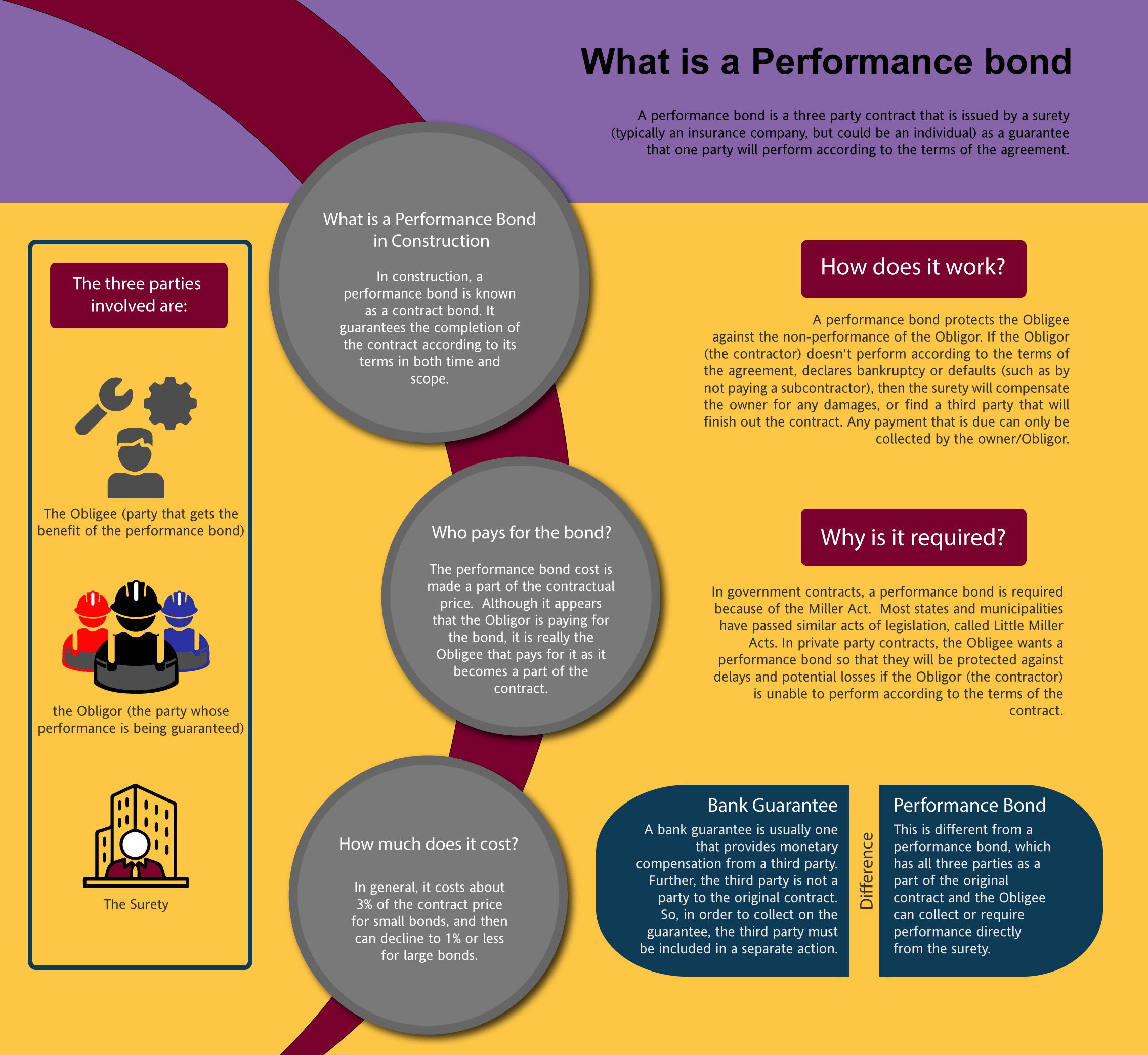
A performance bond is a three-party instrument that guarantees the contractor will perform the construction contract in accordance with its terms. The owner is the obligee, the contractor is the principal, and the surety is the third party that stands behind the contractor’s obligation. If the contractor defaults, the surety must respond under the bond, typically by arranging completion, funding another contractor, or paying the owner for the cost to finish within the penal sum.
That last phrase matters. Every performance bond has a penal sum, usually 100 percent of the contract price on public work, and often 50 to 100 percent on private projects. The bond is not an open-ended guarantee of everything that can go wrong. It is a capped obligation linked to a specific contract. For architects and engineers, that framing sets an outer boundary on what the surety can and will do, which in turn defines how your certifications and decisions affect the owner’s leverage.
Bonds are not insurance. Insurers spread risk across many policyholders and pay upon covered loss. Sureties underwrite the contractor, expect zero loss, and if they do pay, they pursue the contractor and its indemnitors for reimbursement. This recourse posture drives surety behavior. It also explains why sureties take a structured approach when claims arise and why documentation from the architect or engineer carries such weight.
How Bonds Link to the Contract Documents
A performance bond only has content through the contract it references. Most bond forms incorporate the contract by reference, which means the plans, specifications, general conditions, addenda, change orders, and written interpretations can become part of the bond obligation. If your documents are ambiguous, the bond inherits that ambiguity.
The most commonly used bond forms in North America, such as the AIA A312 or the ConsensusDocs 260, align with industry-standard general conditions. They typically require the owner to give notice, allow the surety an opportunity to investigate, and sometimes to attend a conference before declaring a default. The conditions precedent are real. Miss a required notice or leap to termination without the cure periods the contract calls for, and the owner’s claim under the bond can stall. In several disputes I have watched, incomplete or informal default notices added months of delay and legal cost.
Design professionals influence these conditions through the general conditions they recommend, the division 00 and division 01 language they edit, and the decisions they make as the contract administrator. If your contract form requires a specific architect’s certification before termination or default, your words can open or close the path to the bond. That is not a ceremonial signature. It is a trigger linked to millions of dollars.
Payment Bond vs. Performance Bond, and Why Designers Should Care
Owners often procure a package commonly called performance and payment bonds. The payment bond protects subcontractors and suppliers against nonpayment, which helps keep materials and labor flowing. The performance bond protects the owner’s completion and quality interests. While the payment bond is more visible to trade contractors, the performance bond has a subtler, heavier presence for design professionals.
When workmanship slips, schedules fray, and submittals circle without closure, the performance bond is the owner’s backstop. Architects and engineers, acting as the contract administrator or owner’s representative, shepherd the paper trail that supports any claim. This cuts both ways. If you document clearly and align swiftbonds with the contract’s processes, swift bonds market you create space for the surety to step in decisively. If your file is a thicket of informal emails and off-the-record site directives, the surety may argue facts, scope, and entitlement for months while the project bleeds time.
The Levers the Surety Actually Has
It helps to know what happens inside a surety when trouble surfaces. After notice of performance concerns or default, the surety investigates promptly. They request the contract, change orders, pay applications, schedule updates, RFIs, and correspondence. They will ask you, the architect or engineer, to provide certified copies of payment and progress certifications, your observations, and your assessment of percent complete. That snapshot lets the surety choose a remedy.
Common paths include:
- Finance the existing contractor to finish, under a tripartite agreement with stricter oversight and sometimes with a completion consultant. Tender a replacement contractor, with the owner entering into a new contract while the surety covers the delta up to the penal sum. Take over the work directly, hiring completion resources and managing them. Settle with the owner for a monetary amount in exchange for a full release.
None of these options work without a clear statement of what remains to be built, what defects require correction, and what time adjustment, if any, is warranted. The architect’s punch lists, updated schedules, and as-builts guide these decisions. The engineer’s test reports, nonconformance logs, and commissioning plans do the same. The quality of these documents often determines whether the project restarts within weeks or languishes.
The Architect’s Position: Neutral Certifier, Owner’s Advisor
The architect frequently serves two roles that are easy to blur. First, as the contract administrator under forms like AIA A201, the architect interprets the contract documents, reviews pay applications, and certifies substantial and final completion as a neutral acting on the facts. Second, the architect advises the owner on remedies, strategy, and, in some cases, termination. Sureties rely on the neutrality of the first role.
Consider payment certification. If the architect has been generous on approving percent complete without tracing installed quantities, and has kept the retention low despite lagging progress, then the project’s remaining funds will not match the remaining scope. If default occurs at that point, the shortfall shifts to the surety and, eventually, to the owner’s leverage. Years ago on a hospital addition, an architect’s well-intended monthly approvals overstated masonry progress by roughly 10,000 square feet. When the contractor collapsed financially, the surety argued that overpayments impaired collateral. The job finished, but the parties fought for a year over that delta. Care in certification is not mere accounting; it is the difference between clean surety action and protracted dispute.
The same applies to change order pricing. If the architect endorses price proposals without adequate backup or time impact analysis, the project may carry inflated values that distort the surety’s exposure. A good rule is to maintain a lean, transparent change process from day one. Price where needed, track contingency, log the ripple effects on schedule, and close changes quickly. Sureties respond better when the modification record is tight.
The Engineer’s Position: Technical Authority and Verifier
Structural, civil, MEP, and specialty engineers hold the keys to risk-heavy scopes. Their submittal reviews, site observations, test witnessing, and nonconformance reports will be some of the first things a surety examines during an investigation. A hydraulics test log that cleanly shows progression and re-test outcomes, or a structural inspection report with photos and clear dispositions, gives the surety confidence about the path to completion. Ambiguity invites argument and delays action.
I once worked with a geotechnical engineer on a public works pump station where differential settlement appeared after backfilling. The prime’s excavation sub had ignored lift thickness limits. The engineer’s daily field reports had noted the deviations and requested corrective steps. When the owner later declared default for unrelated schedule issues, the surety initially hesitated, concerned about designer-caused delays. The engineer’s documented nonconformance trail, paired with timely RFI responses, made the technical picture undeniable. The surety financed a replacement earthwork sub within three weeks.
Two habits serve engineers well in this context. First, respond quickly and in writing to field questions, even when the answer is to confirm the contract requirement. Second, catalog nonconformances and close them with a clear disposition, not just a verbal agreement. The discipline feels bureaucratic on good days and indispensable on bad ones.
Notice, Default, and the Architect’s Certification
Performance bonds require procedural discipline. Most forms ask the owner to issue a written notice to the contractor and surety outlining the nature of the performance failure, to allow a period to cure, and only then to declare default and terminate or request surety performance. Some forms also ask for a meeting among owner, contractor, surety, and architect.
The architect’s role often includes verifying that grounds for default exist and that the contractor has failed to cure. Build that record with care.
- Start early with nonconformance notices and letters outlining specific failures and the contract clauses implicated. Set realistic cure periods and note them in correspondence. Keep minutes of meetings where corrective plans are made or missed. Tie payment withholding to measurable deficiencies.
Short emails that say “Please address this” rarely carry the needed weight. Formal letters, logged and delivered per the contract’s notice provision, do. When the time comes to certify that default has occurred, you should be able to stack the file in chronological order and show a clear narrative.
Design Choices That Affect Bond Exposure
Several design stage decisions have downstream effects on the bond and how the surety sees the project:
- Subcontractor transparency. When the bid form and contract require listing key subs and suppliers, the surety’s tender process after default goes faster. It is easier to step into established scopes than to reconstruct procurement midstream. Performance specifications versus prescriptive. Performance specs invite innovation but complicate blame when systems underperform. If the spec sets targets without detailed methods, track baseline calculations and approval rationale, or the surety may debate whether the contractor’s path was acceptable. Testing and commissioning plans. A clear matrix stating who tests what, when, and against which standard helps sureties map remaining work instantly. On a life safety system, that matrix can shave weeks off the takeover schedule. Mockups and first article approvals. Early physical confirmations reduce the pile of unknowns sureties must price when tendering completion contractors. Allowances and contingencies. Sloppy allowance administration can balloon residual scope. Treat allowances like mini contracts: define scopes tightly, track buys against them, and adjust promptly.
Schedule, Float, and the Surety’s View of Time
Money is half the story. Time is the other half. Many defaults are really schedule failures that have turned into cash flow crises. When that happens, the critical path and float allocation determine whether delay costs attach to the contractor, the owner, or swirl in dispute for months.
If you administer the contract, insist on a living baseline schedule with logic ties, resource assumptions, and monthly updates that reflect reality. When a late steel package pushes MEP rough-in, do not let the update “recover” the date with unsubstantiated compression. Call it out, write the narrative, and preserve the float history. Sureties lean on this record to decide if they can meet the contract time, whether to push for time extensions, and how to price acceleration.
On a transit depot I advised, the contractor refused to submit a resource-loaded schedule. Progress meetings devolved into guesswork. When they defaulted at 62 percent complete, the surety struggled to quantify remaining durations. We lost six weeks rebuilding logic and sequencing that a proper schedule would have documented. The cost of weak scheduling habits lands on the back end.
When Architects and Engineers Become Witnesses
If a claim under the bond becomes contentious, you may be deposed or asked for affidavits. Expect questions about certification, communications, field observations, and any decisions that affected cost or time. Thoughtful contemporaneous notes become the backbone of your memory. Editorial comments about personalities, no matter how earned, age poorly and can obscure the clean facts the surety and the court need.
I suggest a split discipline. Keep a running private log of issues with objective facts, dates, photos, and references to contract provisions. Send formal letters or meeting minutes for the file. Save off-the-cuff impressions for your internal team debriefs, not the project record.
Procurement Choices and the Bond
Design-bid-build, design-build, and CM-at-risk distribute responsibilities differently, and those differences affect the bond’s mechanics.
Under design-bid-build, the contractor’s performance bond tightly tracks your documents. The architect’s role as contract administrator is pronounced, which strengthens the link between your certifications and the bond. Under design-build, the design-builder’s bond covers both design and construction obligations. Engineers of record under the design-builder may find themselves indirectly tied to the bond if a design failure is alleged. The surety will still look for clear scope, timely approvals, and definable defects. On CM-at-risk, the GMP amendment, allowances, and owner-directed changes become central exhibits in any claim. Keep them clean and contemporaneous.
Public work adds statutory layers. Many jurisdictions mandate performance bonds for projects over a threshold. Statutes may also prescribe specific bond forms and claim timelines. Architects and engineers who work across states should not assume procedural rules are uniform.
The Tendency to Overreach the Bond, and How to Avoid It
Owners under stress sometimes expect the bond to solve problems outside its reach. Bonds do not cure owner-caused delays, fix design errors, or pay for betterment. If a structural detail requires a thicker plate than specified, that upgrade is not a performance failure. If the owner suspends the work for funding issues, the surety is not obligated to carry idle labor costs. Clarify these boundaries early with the owner, ideally in plain language during the preconstruction conference.
When an owner wants to put the surety on notice, help frame the letter. State the facts, cite the contract, and connect each failure to a specific obligation. Do not lard the notice with every grievance. Mix factual precision with a professional tone. Sureties are more responsive when they can parse the claim.
Practical Habits That Pay Off
Here is a compact field checklist that has saved me pain more than once when bonds hovered in the background:
- Tie every pay certification to measured quantities or defensible percent complete, and keep retention aligned with risk. Issue formal nonconformance notices and close them with written dispositions and photos; do not rely on verbal fixes. Maintain a living CPM schedule with logic and narrative, and resist fictional recoveries. Keep change orders current with cost and time, with backup attached, and track allowances like contracts. Deliver notices per the contract’s method, log receipt, and honor cure periods before recommending default.
These are mundane disciplines until the day they are not. Then they become the difference between an orderly takeover and a lost season.
A Few Edge Cases Worth Anticipating
Projects sometimes drift into gray zones that complicate bond claims.
Scope creep by directive. Owners issue field directives to keep the job moving, then delay formal change orders. If the contractor fails and the surety steps in, the surety may balk at completing work not formally part of the contract. Architects can protect the record by promptly documenting directives as change orders or interim modifications, even if pricing is pending.
Partial defaults. Owners may want to replace a single nonperforming trade while keeping the general contractor. Many bond forms allow cure by partial takeover, but the coordination burden rises. The architect’s phasing plan and interface details between scopes become critical. Draw them, do not just describe them.
Design errors discovered late. If a design correction is needed near the end, betterment principles apply. The surety will resist paying for upgrades, but may fund rework attributable to the contractor’s misinstallation. Separate these costs explicitly, or they will blur, and progress will stall while parties argue allocation.
Force majeure events. Weather extremes or supply chain shocks can reshape schedules and costs. The bond backs performance against the contract’s risk allocation. If the contract provides time, not money, for certain events, the surety will follow suit. Document the event impacts with specificity, and recommend time adjustments promptly to preserve realism.
Where Professional Judgment Matters Most
In the tightest spots, architects and engineers do not win the day by out-lawyering anyone. They steady the process with facts, fair dealing, and timely calls. When quality slips, call it early. When the contractor earns time by reasons outside their control, say so without hedging. When an owner is about to leap into termination, walk them through the notice steps and cure windows without inflaming matters.
I remember a mixed-use tower where the owner had lost patience after months of schedule drift. They wanted to fire the contractor on a Friday afternoon. The architect and I sat with the record and realized two unresolved steel shop drawing cycles had floated critical path by a month, partly due to legitimate design coordination with the façade consultant. We drafted a notice that preserved rights but focused on achievable cure measures. The surety was copied, the contractor responded with a recovery plan, and within three weeks, the job reset. No bond claim was filed. Sometimes the best use of a bond is to make sure you never need it.
Bringing It All Together
If you reduce the performance bond meaning to its essence for design professionals, it is this: the bond monetizes your documents, your certifications, and your administration. It makes your precision valuable and your sloppiness expensive. It rewards early, written, factual communication. It punishes vague process and inflated approvals. It holds the contractor to the bargain and, when that fails, brings a financier who will act if the record is clear.
Architects and engineers who understand the surety’s lens do a few things differently. They write Division 01 requirements that support clean notice, change, and schedule processes. They maintain contemporaneous logs and disciplined pay certifications. They separate design betterment from contractor rework in crisp terms. They do not treat default as a surprise event but as a path with milestones, each documented.
Projects succeed when risk is priced and managed, not wished away. Performance bonds do not build buildings. People do. But bonds set the rails that keep the train from leaping the track when the unexpected happens. If you stand in the role of architect or engineer, your daily judgment determines how well those rails work when the pressure rises.