Payment bonds rarely grab headlines, yet they often decide who gets paid and who bears the risk when a project goes sideways. If you run a service business, manage procurement, or subcontract on public jobs, you have likely felt the ripple effects of a missing payment bond: delayed checks, lien fights, and tense calls about whether the contract even required one. The rules are not uniform. They turn on project type, dollar value, funding source, and how lawmakers define "construction" versus "services." Understanding where payment bonds are truly required, where they are customary, and where they add value is the difference between sleeping well and gambling with payroll.
This piece unpacks when payment bonds attach to service contracts, how different statutes draw the line, how to navigate ambiguous scopes like maintenance and repair, and what practical steps reduce risk regardless of the statutory box your project fits into.
What a payment bond does, and what it does not
A payment bond is a third-party guarantee, usually underwritten by a surety company, that promises suppliers and lower-tier subcontractors will be paid for labor and materials furnished to a bonded contract. https://sites.google.com/view/swiftbond/surety-bonds/consequences-of-not-adhering-to-exclusions-and-limitations-of-surety-bond If the prime contractor fails to pay, claimants may recover directly from the surety up to the penal sum, which is typically 100 percent of the contract price on public works. The owner is not the beneficiary; the unpaid subs and suppliers are.
A payment bond is not insurance for the contractor’s own losses, not a blanket guarantee for every dispute, and not a shield against defective work claims. It covers qualifying payment obligations on the bonded scope. Claimants must follow strict notice and timing requirements to unlock the bond, and the surety will investigate and assert defenses available to its principal. Those mechanics matter when your scope is not purely construction, because eligibility often hinges on how "labor and material" is defined.
The public-private divide: why service contracts get treated differently
Payment bond requirements evolved to solve a specific problem: on public property, unpaid subs cannot file a mechanic’s lien. Since lien rights are the backbone of private-project payment security, lawmakers created a substitute. That policy goal explains two broad truths:
- On public projects, payment bonds are usually mandatory above a statutory threshold. On private projects, payment bonds are optional unless the contract or lender requires them.
Service contracts sit in the seam. If the service looks like construction, alteration, or repair of a public improvement, a payment bond statute probably applies. If the service looks like janitorial work, IT help desk support, cafeteria operations, or staff augmentation, the statute usually does not. The challenge is everything in between.
The federal baseline: Miller Act and service contracts
For federally funded projects, the Miller Act requires prime contractors to furnish payment and performance bonds when the contract is for the construction, alteration, or repair of a public building or public work and exceeds a set threshold. As of recent years, the federal threshold for bonds is tied to the simplified acquisition threshold, which can adjust over time. The critical point is qualitative, not just numerical: the Miller Act targets construction-type contracts. Pure service contracts, such as custodial services, equipment servicing with only incidental consumables, or IT managed services with no physical improvement to federal property, generally fall outside the Miller Act.
That said, mixed-scope contracts can trigger bonding. If a "service" contract includes substantial repair or improvement to real property, agencies often require bonds even if the title says "services." I have seen facilities O&M contracts split into CLINs where routine maintenance is treated as services, while capital repairs that alter the facility are procured under construction rules with bonds. When scopes blur, contracting officers and counsel look to the work’s substance: Are we altering or improving a public work? Are materials being incorporated? Will the owner retain the improvements?
Federal service contracts also intersect with the Service Contract Labor Standards and other labor rules. Those may set wages and fringe benefits but do not substitute for payment bonds. If you are a sub on a federal service contract that includes significant repairs or installation, ask for the prime’s bonding status. If the CO waived bonding or structured the job as non-construction, you lose Miller Act bond protection and must rely on contract remedies.
State and local variations: why your zip code changes the answer
States have "Little Miller Acts" for state and municipal projects. The pattern resembles the federal regime but with critical variations:
- Some states set relatively low thresholds that force bonds on a wide range of work. Others carve out specific exceptions for service-only agreements. Definitions of "public improvement" and "repair" vary, which changes how maintenance and service work are classified.
For example, routine HVAC maintenance under an annual service contract may be treated as services in one state and as repair work in another if it includes component replacements that improve the system. Street sweeping and landscape maintenance are commonly exempt, while tree removal after a storm can switch categories if it restores public infrastructure. Procurement officers often rely on counsel to make these calls. Contractors should not assume uniform treatment based on past projects in another jurisdiction.
Dollar value also matters. A city may require bonds only when the contract exceeds a certain amount, say 50,000 to 200,000 dollars. Below that, the owner might accept other security or none at all. If you are a sub, verify both the legal threshold and the owner’s policy. Some risk-averse public owners mandate bonds even when the statute does not.
Where service contracts usually do not require payment bonds
There is a practical cluster of service types that rarely fall under payment bond mandates, especially on public work:
- Purely operational services with no improvements to real property: custodial, security, staffing, call centers, cafeteria operations. Professional services where deliverables are intellectual rather than physical: design consulting without construction, legal, auditing, training. Equipment-only maintenance where parts are incidental and not incorporated as capital improvements, such as copier servicing under a managed print agreement. IT managed services that do not include physical build-outs, cabling installation, or data center infrastructure changes. Short-term rentals with service components where title to materials does not pass and no permanent installation occurs.
In each case, the lack of a lien-like interest on public property still exists, but statutes generally choose not to bond these services. Vendors rely on the credit of the public entity, prompt-pay statutes, and contractual remedies rather than a payment bond.
Gray areas that cause disputes
The closer a service comes to physically improving property, the more the bond question turns gray. Experience shows five recurring friction points:
- Preventive maintenance with parts replacement. If an annual service agreement for elevators includes recurring modernization or controller replacements, agencies may treat the work as construction-type and require bonds for those phases. Energy performance contracts. ESPCs blend design, installation, measurement and verification, and long-term services. The installation component almost always triggers payment bonds for that portion, even if the M&V period is unbonded services. Telecom and low-voltage work. Installing fiber, conduit, or cabling that becomes part of the facility typically falls under construction rules. A help-desk-only scope does not. Modular or equipment install. When a vendor installs lab casework, kitchen equipment, or modular walls that attach to the building and transfer ownership, procurement teams frequently insist on bonds, even if the vendor thinks of itself as a supplier with commissioning services. Disaster recovery services. Debris removal, temporary shoring, and emergency repairs are often bonded on public jobs once the contract size grows, even when quickly awarded.
Ambiguity hurts the lower tiers first. A subcontractor furnishing materials to a maintenance contract that turns out to be treated as unbonded services has far less recourse if the prime struggles with cash flow.
Private projects: contracts and lenders drive bonding, not statutes
On private work, payment bonds are not mandated by a general statute because unpaid subs can record mechanic’s liens against the property, subject to strict timing and notice rules. That lien right is the primary security. Payment bonds still appear regularly on private jobs for three reasons:
- The owner wants to avoid lien filings and push payment risk to a surety. The construction lender requires bonding as a condition of financing, especially when the contractor is smaller or the schedule is tight. The contract contains a negotiated requirement, sometimes with thresholds by change order size or project phase.
For pure service contracts on private property, bonding is uncommon. A building owner rarely bonds a janitorial or security contract. But watch for two variations. First, in tenant improvement work where a "services" vendor installs improvements under a service master agreement, landlords may require bonds to protect the building. Second, long-term O&M agreements with capital repair obligations sometimes include bonding provisions during the capital phases.
Why the label on the contract does not control
I have seen service vendors assume they are outside bonding statutes because the document is titled "Service Agreement." Courts and procurement offices look past the label. They examine the actual scope, the materials furnished, and whether the work creates or improves a public improvement. If the substance is construction, the label will not save you. The inverse is true as well: a "construction" header does not automatically impose bonds if the state statute exempts the work category or the dollar value is below threshold.
When you review a solicitation or subcontract, focus on the statement of work, deliverables, and whether title to materials transfers and becomes part of the property. That is where bonding obligations hide.
Practical guidance for owners and prime contractors
Owners and primes have aligned interests on clarity. Uncertainty breeds claims and price premiums. Upfront analysis saves headaches later. A simple approach works in most cases:
- Map the scope into buckets: construction or alteration, repair or replacement, routine maintenance, and pure operations. Assign dollar values per bucket. Apply the governing statute or policy to each bucket. If any bucket that requires bonding is significant, consider bonding the entire contract or carving out separate contract actions. Address payment security for any unbonded service portions: retainage rules, prompt-pay compliance, proof of payment processes, and acceptable alternative security such as letters of credit for high-risk vendors. State in the contract whether a payment bond is required, the penal sum, the surety rating minimums, and who pays the premium. Align insurance and bond language. Performance bonds often ride with payment bonds on construction portions. Make sure indemnity and default provisions match what the surety expects so you can actually obtain the bond.
Clear communication reduces bids padded for unknown risk. It also prevents the classic mid-project argument when an owner demands a bond that the prime did not carry in its price.
Practical guidance for subcontractors and suppliers on service-heavy jobs
Subs and suppliers feel payment risk most acutely, especially on large public service contracts that fall outside bond statutes. A few practices help:
- Ask early whether a payment bond exists and, if so, request proof and the surety’s contact information before mobilizing. Do not rely on verbal assurances. Review the scope for construction-like elements. If you are furnishing materials that will be permanently installed, escalate the bonding question with the prime. Negotiate progress payment terms that tie your performance to timely pay from the upper tier, with defined deadlines and suspension rights. Push for language obligating the prime to provide payment evidence down the chain. Calendar notice deadlines if a bond exists. On many statutes, remote tiers must send preliminary notices within short windows to preserve rights. On unbonded public service contracts, understand prompt-pay statutes and any dispute resolution timelines. These sometimes provide interest, attorney’s fees, and suspension rights that are meaningful leverage.
When the risk is outsized, consider pricing in a contingency or adjusting credit terms. A supplier extending 200,000 dollars of product to an unbonded public service contract is effectively underwriting the prime’s credit.
How to read the fine print in solicitations and contracts
Procurement documents often telegraph their intent on bonding, but the language can be murky. Three clauses deserve close attention.
First, the bonding requirements section or instructions to bidders. If it cites the state’s public works bond statute and references both performance and payment bonds at 100 percent of the contract value, you are looking at construction treatment. If it limits bonding to specific CLINs or line items, the owner is likely carving out service phases that are unbonded.
Second, the definition of "work" in the general conditions. Some forms define work broadly to include installation, testing, commissioning, and anything needed to complete the purpose. Others separate "services" from "construction work," which affects how default, warranty, and bonding provisions apply. If you are a vendor whose primary activity is installation of equipment, a broad "work" definition probably ropes you into the bond.
Third, flow-down clauses. Even if the prime’s contract is ambiguous, the subcontract may demand that you furnish your own payment bond or that you be bound by any bond claims made downstream. Subs sometimes accept these without realizing they are bankrolling the surety premium.
Edge cases with real money on the line
Two scenarios illustrate why careful classification matters.
A county awards a 3-year "lift station maintenance" contract worth 2.4 million dollars. Year one includes substantial pump replacements and control upgrades at multiple sites, followed by two years of routine maintenance. The procurement office issues the entire contract under public works bidding rules and requires both performance and payment bonds for the full amount. The prime expects separate bonds only for the capital phases, but the RFP is unambiguous: one set of bonds for the full contract value. If you miss that, your price will be light by the surety premium on 2.4 million dollars and your subcontractors will be angry when the surety demands their sub-bonds.
A state university enters a "smart classroom services" agreement: device management, software updates, and help desk, with an allowance for replacing projectors and installing ceiling speakers. The contract value is 600,000 dollars per year, with 125,000 dollars earmarked for hardware and installation. The owner’s counsel treats the installation allowance as incidental services and declines to require bonds. A second-tier supplier ships 90,000 dollars in equipment to the integrator, who runs into cash flow trouble. With no bond and no lien rights on public property, the supplier has to push upstream through contract claims against the integrator, which may be worthless. A cleaner approach would have been either to split the installation into a small construction contract with a bond or to secure alternative payment protections for the hardware.
The economics of payment bonds on service work
Even when not required, owners sometimes request payment bonds on large service agreements for comfort. That comfort is not free. A reputable surety will evaluate the principal’s financials and the risk profile of the scope. Premiums on payment and performance bonds together often range from 0.5 to 3 percent of the contract price, depending on the contractor’s capacity, history, and collateral needs. For a 10 million dollar service contract, that is 50,000 to 300,000 dollars, typically borne by the contractor and baked into the price.
On service-heavy scopes with low material incorporation and minimal subcontracting, the risk reduction from a payment bond may be modest. On mixed scopes with real installation risk and multiple tiers of vendors, the premium buys meaningful protection and often better pricing from subs who rely on the bond.
Claims mechanics differ on service-versus-construction scopes
If a bond exists, claim procedures matter. Many public statutes set short notice windows that start at last furnishing of labor or materials. On a service contract with recurring monthly work, defining "last furnishing" becomes tricky. Sureties and courts look for discrete scopes rather than an open-ended service relationship. If your service contract delivers work in task orders or capital phases, treat each phase as its own last-furnishing timeline. Keep documentation tight: delivery tickets, time sheets, and acceptance confirmations. If the scope is continuous operations, coordinate with counsel on whether monthly invoices restart any clocks.
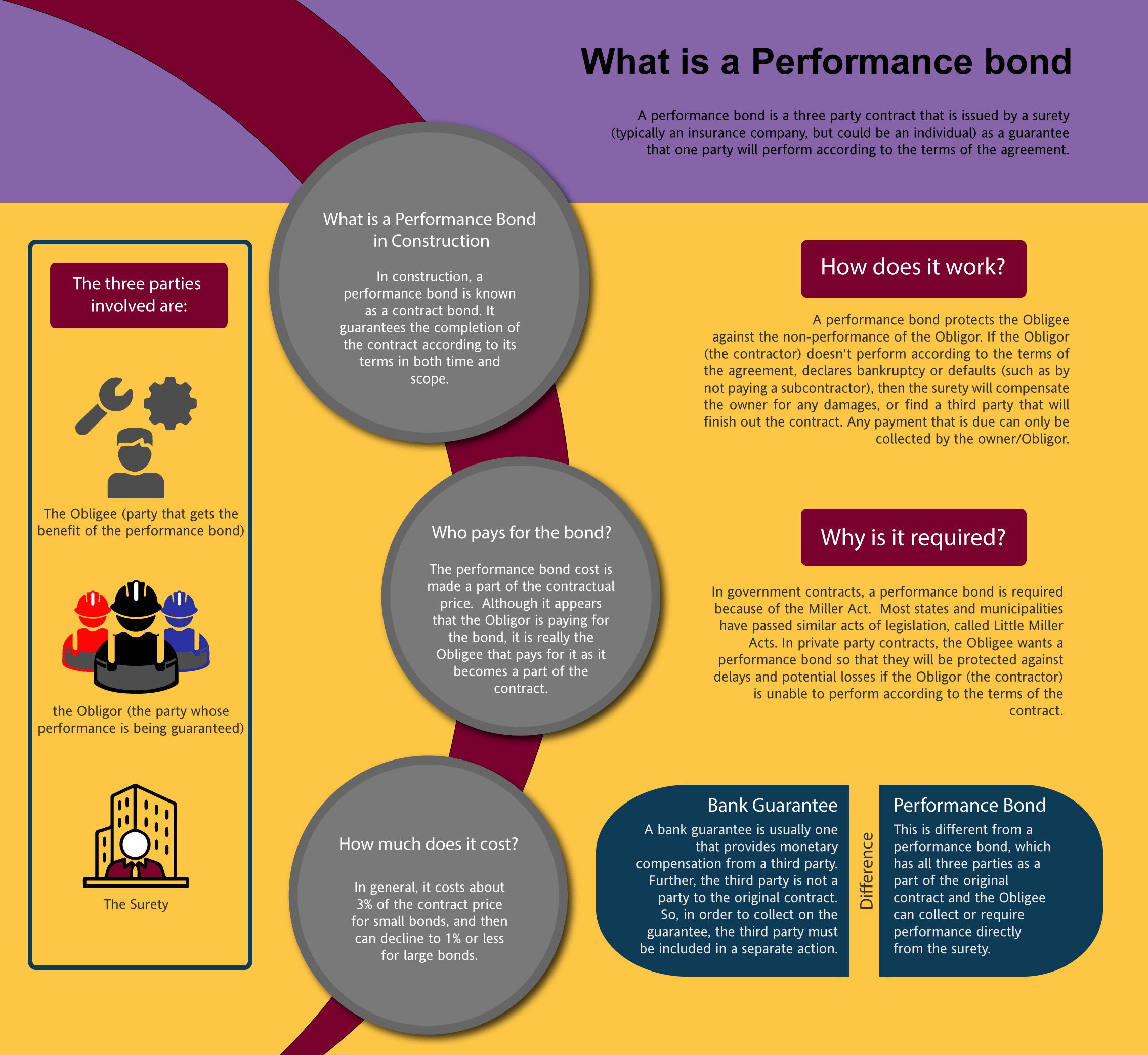
Also remember that some bonds issued voluntarily on private or service contracts are not statutory bonds. They are common-law bonds with terms set by the bond form itself. Notice, suit deadlines, and eligible claimants can differ from public-bond norms. Always read the bond form.
Negotiating alternatives when a payment bond is not on the table
Owners and primes sometimes balk at bonding a service contract, citing cost or administrative hassle. In that case, consider practical alternatives that still reduce payment risk for the lower tiers and keep prices in check:
- Escrowed funds or joint checks for high-dollar materials. An escrow account tied to delivery milestones or a joint check agreement with key suppliers can target the riskiest layers. Letters of credit. An LC drawn in favor of the owner or a trustee can backstop payment obligations without the surety ecosystem. Retainage with proof-of-payment triggers. Owners can hold a small percentage until the prime furnishes affidavits and lien waivers from lower tiers, even on public service contracts, provided statutes allow. Step-in audit rights. Contract language that allows the owner to verify payment downstream and make direct payments if the prime defaults helps keep vendors engaged. Milestone structuring. Repackaging service scopes so that material-heavy tasks stand alone may justify bonding for those tasks only, reducing premiums while improving security.
These tools are not perfect substitutes for a payment bond, but they reallocate risk more fairly and can be documented in clear contract language.
Straight answers to the question everyone asks
Are payment bonds required for service contracts? Often no, sometimes yes, and frequently it depends on whether the "service" includes construction, alteration, or repair that the governing statute treats like public works. On federal and many state projects, once the scope crosses that line and the value passes the threshold, payment bonds move from optional to mandatory. On private work, absent a contractual requirement, payment bonds are rare for pure services because lien rights already exist.
The safe approach is to analyze the substance of the work, not the label; verify the statute and local policy; and document the bonding requirement in the contract. If you are lower tier, do not assume protection exists. Ask for the bond, read the form, and calendar the deadlines. If there is no bond, tighten your credit terms or negotiate alternatives.
A brief checklist before you sign
- Identify whether the work improves or alters real property and whether materials will be incorporated. Confirm the funding source and governing law: federal, state, municipal, or private. Check statutory thresholds and definitions for bonding. Do not rely on the contract title. If bonding is required or desired, specify the payment bond amount, surety rating, and form. If no bond, add payment protections like joint checks, retainage conditions, or an LC for material-heavy portions.
The details decide who gets paid without a fight. Spend an extra hour on classification at the front end and you can avoid months of wrangling over whether a service contract should have been bonded after all.